1-800-PetMeds

Showing posts with label Training. Show all posts

Tuesday, October 21, 2008

Stirling Dog Care

by , Sep 5, 2008
Advice on how to have a well adjusted dog.

Talking from my own personal experience with our Rottweiler Hamish.
I have some valid tips on raising a good behaved dog.
Choosing your breed is very important as a dog breeds characteristics are different. Rottweilers for instance are very intelligent breeds with a very stubborn aloof attitude. They also want to be top dog and will challenge your mental strength regularly. Any sign of weakness will lower your pack status.
They will challenge in all sorts of ways (ie) refusing to eat, stealing food from the table of your child's hand,
Barging their way through your legs, even low tone growling to see if you will be soft enough to let them get away with it.
Do not accept this behaviour i advise that you say out in a firm but calm voice.
Then take your dog outside and shut him out in the garden alone for ten minutes.
When you let the dog in do not make any fuss of him as this will confuse the dog and he has to learn wrong from right behaviour.
Do not hit, kick or punch your dog as this is abuse and will turn your dog in to a nervous aggressive animal.
If you want your dog destroyed bad treatment will result in this . Do not be overly soft and soppy with your dog as you are lowering your pack status. If you are anything but top dog in your house your dog will treat you like dirt. Do not spoil your dog as will have the same bad effects.
You must consider the time you have before buying your dog as they need lots of walks.
Our Rottweiler hamish has 3 walks daily and at least half an hour at a time. Take your dog to a field or dog park so they can run off the leash. It wears them out and is more enjoyable for you and the dog.
An exercised dog is a happy dog. If they have too much energy they will become hyperactive and destructive. Good luck with training your dog. I hope my hints helped.

Thursday, October 2, 2008

Dog Agility Display Training is a Quiet Revolution in Dog Owning Fun

Agility training is a fantastic and rewarding way for both owner and dog to have fun. It strengthens communication and understanding between both parties which makes contented pets always safely and willingly under their owner's control. Dog agility involves training your dog to compete against others on a timed circuit over hurdles and tire jumps, through tunnels stakes and chutes, and weaving speedily around poles.
The dog agility display and competition club circuit which has grown up over the past twenty or more years has spawned its own culture and social events, apart from the popular public displays the top clubs provide now as major attractions daily at almost all dog shows.
If you or I are going to a dog show these days we won't want to miss the agile display! Furthermore, those involved in agility training are really so obviously getting so much more from their dog ownership, that the whole scene is infectious.
The dog agility courses are filled with various obstacles such as tunnels and ladders, which are set out in such a way that the dogs just ache to run and take on the challenge. In fact for many, the owners struggle to contain the energy and pace that their charges bring to the course. These courses are typically about one hundred by one hundred feet in length in total, and the obstacles are provided with numbers to display the order that the dogs have to complete the various obstacles.
Dog agility Classes are often run in blocks of 10, and each class lasts for one and a half hours. The chief objectives in these classes are to create a learning experience where dogs and their handlers are stretched; where dog handling skills are honed and where the confidence of both dog and handler is enhanced.
I recently attended a dog show where the dog agility display held its audience spellbound throughout the entire Sunday afternoon. After the sense of anticipation reached its height with the winning round, fire-jugglers in the arena were almost essential to wind down the audience and herald their departure.
Another recent agility event I saw this summer also highlights the increasingly popular and min-stream nature of agility displays. At our local beach side town, all those strolling the prom appeared to have been drawn as if by magnets to a summer's evening agility display. Immediately behind the beach the setting sun made a fine back drop as the dogs barked to be let to run, ran at the starter's whistle, jumped and weaved. Once it was fully dark the council provided a fine fireworks display to round off the evening, which brought even more crowds enjoy the spectacle.
Of course these dogs which, come for a variety of dog breeds, can be wayward and they can be unpredictable. Even the best trainers have those days when they don't fare so well, sometimes one almost feels that some dogs are taking the mickey out of the handler. However, this is all part of the attraction for the spectator. After all watching animals perform has always attracted humans, but in recent years there have been fewer opportunities for people to do so. The rightful reduction in cruel activities, and with even circuses suffering from the wish that no animal be belittled by degrading and cruel practices just for human entertainment, opportunities for simple enjoyment of animal displays have diminished.
Modern dog agility team displays fill this void, plus some! They demonstrate pure joy and common purpose between man and animal. They encapsulate ‘Healthy Living’ with the vim and vigor obvious in both dogs and owners as their canine partners soar over obstacles and chase so joyfully around agility arenas.
Dogs in Need is now one of several week long Kennel Club agility shows to take place each year in the UK. This particular event is just one part of a busy calendar of day and weekend shows. Dog agility has grown in the UK to the point where the most popular Kennel Club shows regularly run ten or more rings a day, with up to 450 runs in each ring (or more if two judges are used in each ring). Dogs that are clearly over or under a particular height category will not need to be measured.
The love of dogs when trained can also bring great fulfillment and improvement to the quality of life to the mentally and physically disadvantaged. Dog AID is a charity which helps provide access to dog training for people with physical disabilities, and enable them to train their own dog in basic control and specialized tasks, which will assist them to manage their disability in everyday life. It is now a nationwide voluntary organization, which provides specialized training for people with physical disabilities and their own pet dog.
Dog agility enthusiasts have also been inventive in producing treats and products for their pets away from the various events. One supplier also provides clicker training products, including clickers, a Click-A-Tricks booklet, treat bags and carabiner, and a variety of training kits so you can pick and choose the best selection of dog treats to fit your dog's needs.
Steve Evans is an inspirational author. He has written many articles at the [http://www.dog-breeds.me.uk]Dog Breeds Compendium. If you enjoyed reading this article we suggest a visit to his site.
Article Source: http://EzineArticles.com/?expert=Steve_D_Evans http://EzineArticles.com/?Dog-Agility-Display-Training-is-a-Quiet-Revolution-in-Dog-Owning-Fun&id=1532499

Saturday, September 20, 2008

Your Dog's Body Language

Dogs use their bodies and paws to express a variety of different things. Below are some examples and what they mean.
Dog crouches with front legs extended, rear up, and head near the ground: This is the classic play-bow and means simply "I want to play!"
Stiff-legged, upright posture or slow, stiff-legged movement forward: "I am in charge around here!" and "I challenge you." A dominant dog will use this posture to indicate assertion of authority and a willingness to fight for it.
Body slightly sloped forward, feet braced: "I accept your challenge and am ready to fight!"
Dog rolls on side or exposes underside: "Let us not argue" or "I am not a threat to you" or "I accept that you are in charge here." This is a submissive response to avert conflict. Many dogs adopt this posture in a fairly relaxed and contented manner when they are around their pack leader. When your dog rolls on his back for a belly rub, he is actually accepting you as leader of the pack.
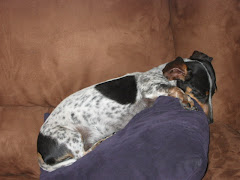
Dog places head on another dog's shoulder or places paw on the back of another dog: "I want you to know who is the boss around here." These gestures are commonly used by dominant dogs, pack leaders, and dogs that have aspirations of becoming a pack leader.
Mouthing: This shows up in dog-human interactions as the dog taking the handler's hand in his mouth or, while walking, taking the lead in the mouth. Mouthing can be a serious sign of dominance challenging and shows that the dog does not accept the human as pack leader.
Dog places paw on master's knee: "Look, I am here" or "Pay attention to me." This attention-seeking signal has many variations. They include pawing the air in front of their master or sliding the head under the master's hand.
Hair bristles on back and shoulders: This is a sign of anticipated aggression. A ridge of hair bristling down the back is a sign that says "Do not push me, I am angry!" When the bristling extends to the shoulders it means "I have had it with you" and is a sign of an imminent attack.
Dog sits with one front paw slightly raised: This is another sign of stress but is combined with insecurity. It means "I am anxious, uneasy and concerned."
Dog rolls on his back and rubs it on the ground: This is sometimes preceded by nose rubbing where the dog pushes his face, and possibly his chest against the ground in a rubbing motion or rubs the face with a forepaw, from eyes to nose. They often follow feeding or occur as the dog's owner begins to prepare food. However they also can occur following or in anticipation of other pleasant activities.
Scraping the ground and ripping the turf with the paws: This is usually after the dog has defecated but may occur at other times. Dogs have glands on the bottom of their feet that provide each with a unique scent. What a dog is saying here is "I was here and I am leaving my calling card!"
Article by Kelly Marshall of [http://www.ohmydogsupplies.com/dog-supplies/dog-toys/]Oh My Dog Supplies, check for current specials on [http://www.ohmydogsupplies.com/dog-supplies/squeaky-toys/]squeaky dog toys online.
Article Source: http://EzineArticles.com/?expert=Kelly_Marshall http://EzineArticles.com/?Your-Dogs-Body-Language&id=1505054

Thursday, September 18, 2008

Top 6 Dog Training Mistakes - Are You Making These Mistakes When Dog Training?

Dog training is really pretty easy, if you aren't making any of these mistakes. The mistakes made during dog training are usually a result of frustration or just being forgetful. Are you making any of these mistakes while trying to train your dog?
1. Using Different Cue or Command Words - When training your dog you should always use the same word or "cue" during training. The use of many different words can be confusing to your dog and he will not learn what it is you want from him.
2. Physically Punishing Your Dog During Dog Training - Do you hit or smack your dog when he or she doesn't do what you ask or does something unacceptable to you? Physically punishing your dog only causes your dog to either fear you or can cause your dog to become aggressive.
3. Yelling or Shouting During Training - If you are yelling or shouting at your dog while trying to train, you are defeating the purpose all together. You want your dog to obey your commands in your calm voice. By yelling, you are only going to cause confusion for your dog Always make your commands or cues in your normal, calm voice. Using different tones of your voice is not the same as yelling or shouting.
4. Training sessions lasting longer than 10 to 15 minutes - Your dog training sessions should only last from 10 to 15 minutes. Your dog will not continue to keep his or her attention on you for longer periods than this. You need the training sessions to be beneficial and thinking that your dog will pay full attention for long periods of time is like expecting a toddler to sit in one spot for more than 5 minutes.
5. Forgetting To Praise Or Treat Your Dog EVERY TIME he or she follows a command or acts appropriately - You have to remember to give your dog praise or a treat each and every time he or she follows a command or is acting in the manner you are expecting.
6. Training When In A Bad Mood - If you are trying to train your dog when you are in a bad mood, had a bad day or are not feeling well, your dog will not get the full benefit of your efforts and this can cause you aggravation. It can also confuse your dog Always wait to train your dog when you are in good spirits.
Training your dog has never been easier! With the help of SitStayFetch, you can avoid the mistakes that are easy to make and stay on the right track to training your dog. For a review of the site, visit [http://www.adogintraining.com]A Dog In Training - Review Of SitStayFetch.
Dog training is an important and vital part of your dog's life. A trained dog is happier, healthier and safer. Visit [http://www.adogintraining.com]A Dog In Training for more dog training tips and resources.

Monday, August 11, 2008

Invisible Wireless Fence For Dogs

Invisible dog fencing, also known as a pet fence or a fenceless boundary, is the best way to fence in a yard where your dog can play safely without creating an obstruction of your view. The way the invisible dog fence works is pretty simple; a wire is buried underground around the perimeter of your home. The wire carries a radio signal, which is received by a lightweight collar your dog should have on whenever he is outside. When the dog nears the boundary, the collar emits a warning sound, activated by the radio signal emitted from the buried wire. At this point, most dogs will back away, realizing they are too close to the perimeter. However, if the warning is ignored and the dog crosses the boundary of the fence, he will receive a very mild electric shock.
Invisible pet fences are safe for families with children, as they only affect animals wearing the receiver collars. However, it is important that you never cross an invisible boundary line holding an activated collar in your hand. Although most common around the homes of families with dogs, invisible animal fences can also be used to contain livestock in circumstances where ordinary agricultural fencing is inconvenient or illegal. This is true on British common land.
Some invisible dog fences are entirely wireless. Rather than using an underground wire, they emit a radio signal from a central unit. The central unit senses when the dog is too far away and sends a warning signal beep to his collar. If the dog ignores the warning and continues to travel away from the central unit, he will experience a mild shock. Another version of the wireless collar uses GPS signals to determine proximity to a predetermined virtual fence. With this product there is not need for any physical installation, which allows some additional flexibility and also makes it easier to change the boundary locations at any time.
All invisible dog fences come with variable setting on the shock collar. Larger dogs require a higher setting in order to be corrected, whereas small dogs may be hurt by those settings. It is important to read the instructions carefully and make sure that you set the collar at the lowest effective setting for your dog's weight and size. Some kits also come with boundary flags so landscapers and utility workers won't accidentally dig up the wires while working in your yard. Most systems also sell additional collars separate from the fence kit so you can control multiple dogs within the boundaries of your invisible pet fence.
Critics of invisible fencing often make claims that the practice is inhumane and can hurt your dog. This is not true as long as you follow the directions and be sure that you have set the shock level on the lowest possible effective setting. Most dogs will only need to cross the boundary once before they have learned their lesson and thereafter will be sufficiently controlled by the warning beep.
Candis Reade is an accomplished niche website developer and author. To learn more about [http://mydogfences.info/invisible-fence-for-dogs/]invisible dog fences, please visit [http://mydogfences.info/]My Dog Fences for current articles and discussions.

Saturday, June 28, 2008

Understanding Dog Agility Equipment and How Each Obstacle IIs Used

If you have thought of getting your dog started on agility training, then you have probably come across a multitude of products. For the beginner, the various equipment can be daunting, especially without prior knowledge of how the equipment is used. To make things easier, here is a breakdown on a few pieces of agility equipment and how each is completed. Before you know it, you'll be heading to the pet store to pick out your favorite pieces.
Agility courses can range in types and number of obstacles depending on the competition (or the owner's backyard). In a typical agility course you can expect to see weave poles, jumps, tunnels and chutes, A-frames or dog walks, see-saws, and pause boxes. A-frames, see-saws, and dog walks are all considered contact obstacles. These pieces of equipment have painted contact zones where the dog must keep one or both feet in the zone during obstacle completion. The setup of the course is unknown to the owner before the competition; during the competition, the obstacles must be completed in a specific order. The owner directs the dog through the course using voice commands and hand signals. The owner is not allowed to touch the dog or the equipment at any time. The dog is graded on how quickly and effectively he completes the course.
Weave poles vary in length but are normally made up of 6 to 12 poles. Competition poles are colored, making it easier for both the participant and the judge to trace the obstacle. The poles are fixed into the ground or part of an adjustable set. The poles are spaced anywhere from 19" to 25" depending on the agility level of the dog. The dog must start the weave poles by entering on the right side of the first pole. After that, the dog continues to weave through all the poles without skipping a pole.
Jumps come in a variety of sizes and styles. A tire jump is a suspended tire in which your dog must jump through. Bar jumps are similar in appearance to hurdles. Bar jumps can be one single jump or a series of jumps. When completing a bar jump, the dog must successfully clear the jump without knocking off the bar. Panel jumps are similar to bar jumps, except the dog jumps over a panel that touches the ground; unlike a bar jump, there is no space between the top of the jump and the ground.
When competing in an agility competition, you pooch will be required to run through a tunnel. The tunnels stand on their own and are completely covered; your pooch cannot see you. Chutes are similar to tunnels except they do not stand on their own. Instead, one end of the chute is open, but the rest of the chute lies on the ground. It's up to your dog to enter the open end and make his way through the collapsed chute.
A-frames are ramps that your dog must run over. The steepness of the frame can be adjusted. The A-frame is required in most agility courses, and it tests your dog on his ability to ascend and descend an incline. The dog walk is completed like the A-frame; your pooch must be able to make it across the walk. Instead of having an A shape, the dog walk consists of an incline, a flat walkway, and a decline. The see-saw is similar to its child's counterpart. As the dog walks up one side, the other side drops. The see-saw can be adjusted to different heights.
A pause box or table is quite simple. It is a square table with four legs that can be adjusted to different heights. When a pause box is present in an agility course, the dog must jump onto the table and remain still for a certain period of time.
Understanding the different types of equipment is the first step in training your dog for an agility competition. The equipment used in a competition is completely dependent upon the host of the competition. If you are looking to build your own obstacle course, then you should check with desired competitions to find out what types of equipment they favor. With practice and training, your dog can learn the ins and outs of the obstacle courses.
This article was written by Brian Spilner a provided by pet-super-store.com a site featuring: [http://www.pet-super-store.com/pet-supplies/petsafe/]Petsafe training collars and [http://www.pet-super-store.com/pet-supplies/innotek/]Innotek dog training systems

Friday, June 27, 2008

How to Train Your Dog to Bring You the Newspaper in a Few Easy Steps - Fun!

Wouldn't it be nice to wake up in the morning, grab a cup of coffee, open the door and then have your dog bring your morning newspaper to you? I thought so. Not only is this a cute trick to teach your dog, but it's also a useful one. Don't worry about making your dog work too hard because your dog will be happy to fetch your paper for you. Dogs are always looking for something to do! It's pretty simple to do and doesn't take much time investment on your part to achieve results.
Assuming that your dog already knows how to retrieve, this trick shouldn't be a problem at all for you. If your dog doesn't know how to retrieve but likes to get things that you throw for him, you should be ok too. Let's assume that your dog already knows how to retrieve for the sake of the information needed for teaching your dog this particular trick.
First, what you'll need to do is take a small section of your daily paper and roll it up pretty tight and then tape it up with some kind of tape you have around the house so it can't become unrolled. With your dog watching, throw the paper for him and say "Bring Me The Paper." When he brings it back, praise him! You'll want to repeat that action at least a few times daily.
Next, start to let your dog bring you the paper you rolled up into the house from the outside. What you'll need to do is to start throwing your rolled up paper to wherever it is that your paperboy leaves your paper. Same thing, after you toss it, say "Bring Me The Paper." The difference this time is that you're letting him bring it into the house and familiarizing him with the spot where the paper will normally be. You'll also want to repeat that action at least a few times daily.
After your dog is familiar with the spot where the paper will normally be, start having him pick up the paper exactly how it is delivered meaning that if it's folded, or in a plastic bag, or however it is that your paper usually comes. Just make sure that your training paper is just like the real one will be. After you complete the above training steps, you should be ready to let your dog start bringing you your paper everyday! When you hear the paper delivered, you should be able to open the door and tell your dog the command "Bring Me The Paper." He should respond by going to the normal spot where you trained him to get the paper from, grabbing it, and bringing it into the house for you!
One thing you need to keep in mind is that if your dog likes to run away and your yard isn't fenced, you'll need to make sure you work on off-leash training with him before you start training him to grab the paper for you.
Jake Cooper is a long time dog owner who has acquired extensive knowledge in dog training through training his own dogs over the years, who were very troublesome at times. More information on this subject and others is available @ [http://dogtrainingpark.com/dogblog/]www.dogtrainingpark.com/dogblog
Feel free to download a Free Special Report I have prepared on Dog Health, Nutrition, & Pet Food @ [http://dogtrainingpark.com/dogblog/free-dog-nutrition-report/]www.dogtrainingpark.com/dogblog/free-dog-nutrition-report/

Thursday, June 26, 2008

How to Reward an Obedient Dog

Like humans, dogs also need to be rewarded for their obedient behavior. Some dogs prefer to be given food, while others prefer to be given toys to play with, while a tap on the back will be ok with some dogs. One needs to know what his/her dog likes.
Some of the ways to facilitate the training process of your dog are:
1. You can use food to treat your obedient dog. This works perfectly with virtually all dogs. Giving your dog his favourite food will make it behave well next time.
2. The use of your voice can be very helpful to the dog. You can use words like "Good boy" or any scintillating tune to cheer your dog up for an obedient behavior.
3. Use a particular phrase or command each time you want to stimulate your dog to do something. With consistent repetition of the phrase will make your dog master it, and it will increase the rate of its obedience.
Dogs like instant appreciation for a behavior well done. This inspires them and motivates them to do more. Further more, this type of rewards makes the relationship between you and your dog to be more cordial and powerful.
Positive reinforcement in dog training can be a powerful correctional tool relationship and should be utilized anytime that a dog is exhibiting the desired behavior. Dogs really respond to this type of dog training, as they are always excited for any type of positive interaction between them and their owner.
I believe this article was educative. I urge you to put these things into practice, and you will be surprised at how your dog will be more obedient to you.
Samuel Silas is a dog lover. He has a lot of materials on dog training issues, which include obedience, and lot s more. Visit his dog dedicated blog at: http://dog-trainingsam.blogspot.com to get more resource.

Thursday, June 19, 2008

Dog Training Myths Exposed - Should You Really Avoid These Things?

There is a lot of information floating around out there on how to train your dog, so I thought it would be important to focus on some of the myths that I have found in my experience to simply not be true.
1) Don't feed your dog "people" food
I never understood this one. So what if I want to treat my dog to a hamburger? I think the important thing here is to set clear limits, and not have your dog expect you to share your lunch with him or her every meal.
2) Don't play tug of war with your dog
I also don't understand where this came from. You want to be careful with older dogs though, you don't want teeth falling out!
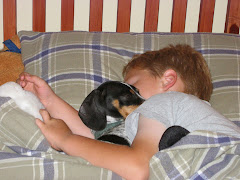
3) Don't let your dog sleep in your bed
Now this is just plain ridiculous! If you like to cuddle with your pet at night, that's certainly fine. I have not seen it do any type of damage to the dog. It is a nice opportunity for the two of you to be closer.
4) Don't let your dog on your couch, furniture, etc.
I think the important thing to keep in mind here is that your dog listens to you. If you are okay with him or her being on the couch, that's great. But if you ask him or her to get down, there needs to be obedience. If not, correct this right away so you are able to maintain control over the behavior.
Dog training really isn't that hard, just make sure you are consistent!
Learn how to train your dog today with my [http://fastdogtrainingtips.com/ecourse.html]free dog training ecourse.
Latest article: [http://fastdogtrainingtips.com/aggressive-dog-training.html]aggressive dog training.

Wednesday, June 18, 2008

How to Train a Dog to Stop Barking Before You Go Barking Mad!

Have you ever pointed your remote at your dog and hit "mute?" The barking can really hit the spot sometimes, it can literally drive you nuts! I am sure you know EXACTLY what I mean. So let's look at how to train a dog to stop barking.
You can probably guess WHY dogs bark. It is how they express themselves. When they are in angst, and they wish to tell you about their deep emotional upsets, they bark. And boy, do they bark! And you don't have to be around to hear them. In fact, it is quite common for a dog to not bark when they're with their owner, but as soon as they're alone, off they go. Your neighbors will probably clue you in on this when this happens.
Well, to train a dog to stop barking, you first will need to understand what motivates the dog to bark in the first place. The more accurate you can be with this, the easier it will be to stop the barking.
Let's rule out the obvious first: Is your dog hungry? It could be that simple. It's not nice being hungry, and if I was really hungry, I think I would bark too!
Next obvious reason could be a lack of exercise. If your dog has been locked up for a few hours then he'll need some exercise, and possibly a bathroom break. Dogs like to be out and about, so you should not keep them locked away for long periods of time. If you do, expect lots of barking.
Now let's look at what we can do to train a dog that is still barking, despite plenty of exercise, attention and food.
You'll want to look out for causes. Some barking can be caused by a passing person, another dog, or even insects. This can be resolved somewhat by ignoring these attention seeking barks until your dog calms down. Then give praise and reward your dog for the "ability" to quieten down. You'll need to practice patience for this, but stick with it. The trick with training any dog is repetition.
Of course, if you can limit these external causes then you definitely should. My friends dog can go a bit crazy when eying the neighbors cat through the dining room window. A change of room does the trick. Of course, this is not a solution as such, but it does bring instant quietness!
Dealing with a barking dog when you're physically there is a lot easier than dealing with a barking dog when you're not there, as you can utilize correct timing, praise and correction. Here are some methods you can try:
A water gun - Aim for the chest, never the face. This method is a little hit and miss. You must be quick to draw, or the effect is greatly reduced. I'm not a fan personally.
Collar and leash - This can work if your dog is already trained to respond to a tug. Try it, it can work well to suppress barking.
Physical correction - This is a very effective method. When your dog barks, go down at their level and firmly wrap one or both hands around the snout and repeat a corrective command. But you mustn't be at all violent, or inhumane. Do not shake their snout, just a firm hold and that's it. This works very well. I usually say "Shh" until the dog stops resisting my hands. This is a great method for asserting your dominance as well.
Remember, be consistent, and be repetitive. That is crucial. And never get angry at your dog, you'll only make it worse. Just stick to your plan, and as soon as the barking stops, give praise and a treat!
Good luck!
Get your [http://trainingyourdoggy.blogspot.com/]FREE 6 Day Course and discover the proven, 'lab-tested' strategies a 34-year-old dog lover used to obedience train over 20 THOUSAND people's dogs, and experience the ENORMOUS benefits you and others will gain from obedience training your dog! [http://trainingyourdoggy.blogspot.com/]Click Here Now to learn more.

Monday, June 9, 2008

Doorbell Training

How many people have the problem of their dog charging the door barking and acting in a highly excited state each and every time the doorbell rings. As I have stated previously, this is the result of training on the part of the owner. Remember Positive Thigmotaxis? The problem usually starts because of an unresolved pack leadership problem with the dog. The dog thinks it is the king of the house and when the doorbell rings, rushes to the door to protect the house from intrusion by strangers. The dog first must understand that it is not the pack leader. This is accomplished by completing the training on Pack Leadership. The next step is to get some friends to act as doorbell ringers. That's right, you get them to come to your house and ring the doorbell. You are not going to let them in. You just want them to ring the bell and go away. When the doorbell rings, let the dog bark and tell you there is someone at the door. You want him to alert you when someone is at the door. Tell him "good dog" and give him a reward. You want him to learn to bark a few times and then shut up. Walk away and go about your business. Pay no attention to the dog, even if he continues to bark at the door. When the dog finds out that it is no big deal with him barking at the door, he will stop barking and probably come to find you. When he finds you and is not barking, give him a reward.
Have your friends do this several times a day and do the same routine. The dog will get tired of telling you that it is important that you know there are strangers at the door and stop acting like a crazy nut when the doorbell rings.
The next step is similar to the conditioning for the aggression toward strangers. Have a friend come over to your house, ring the bell and when the dog goes to the door, give it its reward, and put a lead on the dog. Tell your friend to come in and go into another room and sit down. They can watch T V or read or anything else they might want to do. You stay where you are and with the dog on lead do some behaviors such as come, sit, down, side and any other behaviors the dog might have command of. If the dog does not quiet down, do the Magic Button routine until you get a quiet dog. As the dog gets more self control in this situation, move into the room with the stranger and reward the dog if it acts in a calm. quiet manner toward the stranger. It helps if you have worked the dog on the Meeting Strangers program. The dog must act in an acceptable manner in order to get the reward. As the dog is able to accept people ringing the doorbell and coming into the house without acting in an excitable or aggressive manner and trying to jump on your guests, the household will become a more quiet, peaceful for both you and your dog.
I have been involved in manufacturing and judging dogcarting for over thirty years.
I am a certified dogcart judge for several Breed Clubs.
I have been practicing animal behavior therapy for over thirty years.
http://www.dogcartman.comhttp://dogcartman.blogspot.com
Giant Regards, Harry Russ M Ed123 Yeager Ave. Forty Fort Pa.18704-4031dogcartman@gmail.com

Friday, June 6, 2008

Dog Training - How to Decide the Best Training Technique For Your Dog

Dog training. There are as many opinions are there are dog owners. We all want well-behaved dogs. Yet the same technique may work for your golden retriever but not for your lab. How do you decide what method is the best for your dog? You experiment.
Transforming your dog's behavior is the goal of many dog owners. Sometimes the best thing for your dog is a combination of several different methods. Below are some different training techniques. You should choose the one that you are comfortable using and the one that is best suited to your dog.
Reward Training. This is usually the first method many people use because most dogs are highly motivated by food. Giving a dog a reward for something he does "right" teaches him to associate his good behavior with a treat. Giving treats, in addition to praise, is often highly effective.
Clicker Training. This is similar to reward training because it is often used with treats. When your dog does something good, you will click the clicker, then give him a treat. Soon, through classical conditioning, he will associate the clicker with good behavior and know that he will be getting a treat.
Choke/Prong Collar Training. These collars are sometimes controversial. Many people associate these collars with inhumane treatment mainly because the majority of people use them improperly. The idea behind this type of training is that when you pull on the collar to "choke" or "pinch" the dog's neck, he is supposed to recognize that he is being corrected for an undesirable behavior. The hope is because it is uncomfortable to him, he will not repeat the behavior. The loose collar is the reward for discontinuing the unwanted behavior.
Head Collar Training. There are a few different types of head collars. These are basically "harness" leads and include the Gentle Leader and the Haiti. They have a strap that goes around the dogs nose and around the back on his head. If he tries to eat a stick or pull out in front of you, for example, you pull on the leader and redirect his movement.
Electric Collar Training. Using an electric collar is also a controversial training method. You should administer a small electric shock only to correct undesirable behavior. It is essential that you be fully trained in this method of training. Both the timing of the shock and the timing of the reprimand are very important as the dog must learn to associate it with the correction.
Dog Whispering. This is a fairly new form of training but one that is gaining popularity. It is based on understanding the body language and behavior of your dog and learning to communicate in a way the dog understands. This method requires much patience and persistence and is not a quick process.
And now I invite you to learn more about training your dog. Visit http://www.GoldenRetrieverpro.com for more information in all areas of caring for your dog.
Article Source: http://EzineArticles.com/?expert=Jenny_Stinson

Saturday, May 24, 2008

Coprophagia - Is Your Dog A Poop Eater? Understanding And Curbing This Behavior

As human beings, we think the whole idea of poop is pretty disgusting. We dont' talk about it and we certainly don't enjoy it. However, if you're a dog that has coprophagia, then you not only think your poop is great but you also eat it on a regular basis. And, if you're a human that has a dog with this condition, you are probably frustrated and annoyed with your dog. Well, help is here. In this brief article, we'll provide an overview of coprophagia and give you some tips for dealing with this condition. So, without further adieu, let's get started.
First of all, you must realize that you are not alone. This poop-eating condition affects millions of dogs around the world. It doesn't tend to be breed specific and effects all types of dogs. Doesn't matter is fyou've got a Poodle or a Pit. Lots of dogs eat poop.
Second, no one really knows why dogs do this. However, some theorize that dogs do this because they have internal parasites, to supplement their diets, because of their carnivorous nature, or simply because they're bored. Some even suggest that they simply enjoy the taste. The point of the matter however, is that no one knows for sure why some dogs engage in this type of behavior while other dogs do not. However, one thing is certain; the act of eating poop is a matter of personal preference.
Here are some tips to help your dog curb the habit:
- Take your dog to a veterinarian to rule out medical causes of this condition.
-Make sure your dog is properly housetrained so your dog doesn't feel the need to hide their mistakes by eating them.
-Teach your dog the "leave it command" and reward them for not eating poop.
-Remove any poop from your yard as soon as your dog leaves it to keep him from eating it.
-Make the poop unappealing by adding a bit of bitter apple to it or some hot sauce. Another option is to purchase a commercial product that makes his poop smell and taste nasty.
-Be consistent in your retraining efforts and take your time. It took your dog a while to develop this habit and it will take him a while to stop it as well.
In conclusion, coprophagia is a condition that affects many dogs (and dog owners) around the globe. Although it isn't breed specific, there are many reasons why dogs eat poop. If you've got a poop eater, you should diligently follow the above tips and hopefully your dog will stop eating poop. At the very least, you can take comfort in knowing that you did everything humanly possible to encourage him to stop.
Good luck!
Do you want even more information about stopping your dog's poop eating or other unwanted behavior? Visit http://www.sitstayhelpdog.info the number one resource for dog owners who have successfully eliminated this behavior and other unwanted behaviors as well. Visit http://www.sitstayhelpdog.info today.
Article Source: http://EzineArticles.com/?expert=Kristiana_Jones

Friday, May 23, 2008

Dog Whining - How To Stop Dog Whining In Your Adult Dog

If your dog is a whiner, chances are that this behavior started during puppyhood. He used to whine, you'd react and he soon learned that whining was the way to get what he needed. Now that he is an adult however, this whining has become a pain. The good news is that an old dog can be caught new tricks. In this article, we'll teach you about whining and what to do about it.
First of all, you must understand that some whining is inherent. Puppies whine it to inform their mothers that they need something and adult dogs do it to get what they want too. The key in dealing with whining is to realize that there are many reasons dogs whine including they're hurt and in pain, upset,afraid or anxious, need to go outside, or are bored and need stimulation
Second, how you react to his whining will either reinforce or stop it. If his whining is justified then there may be little that you can do except take care of his need. If it isn't justified then you'll have to take care of his needs before you can expect him to stop whining.
But, how do you tell why he's whining? Here's some clues:
He's Hurt and In Pain
For instance, if he starts whining all of a sudden and it gets louder, he may be in pain. If so, check him out. This can be done by rubbing your hands along his legs and giving his joints a little squeeze. Be gentle. Look for signs that he is in pain. For instance, see if his paw is hurt or if he is favoring a certain side of his body. Do you see any cuts? Do you see any blood? Do you see anything at all that can be causing him to whine? If you cant figure it out but suspect that he is whining because of pain, have him evaluated by a professional veterinarian to ease your mind and his pain.
He's Lonely and Needs Stimulation
If he's lonely he will probably follow you around like a lost pooch or pace the room like a little maniac. He will seem to be in a trance not knowing what to do next. In this instance, you should take him outside for a quick walk and then exercise him vigorously. You can also give him some new toys to play with or spend some one on one time with him.
He's Scared and Needs Comforting
This whining occurs when there a storm or something out of the ordinary happening. In this instance, try to alleviate his fears. Encourage him and tell him that everything will be fine by speaking softly and not overacting. Don't pat, hug, or coo at him. This will only make the situation worse. Instead, comfort him and move on.
He Needs to Go Outside
If he needs to go outside - take him outside and let him go. This means that you've done a good job of training him not to potty inside. This is an accomplishment in itself.
In conclusion, by understanding why dogs whine, you can help your dog overcome the situation. Just be diligent in your efforts and understand that some whining is needed. By satisfying those needs, you'll be able to alleviate the whining.
Good luck!
Do you want to cure your dog's behavior problems? Visit http://www.sitstayhelpdog.info the number one resource for dog owners who want to help improve their dog's behavior without inhumane treatments or punishments. Visit http://www.sitstayhelpdog.info today and help your canine companion!
Article Source: http://EzineArticles.com/?expert=Kristiana_Jones

Wednesday, May 21, 2008

The Importance Of Socializing Your Puppy

As a Doberman breeder and owner, I am very aware of the importance of proper socialization for your puppy to assure a good fit with your home and family. Certain dog breeds have reputations as being vicious or aggressive and some by nature are more territorial and protective, but any dog not socialized from an early age will be a problem.
From birth to 8 weeks of age, when the pups go to their new homes, it is the breeders responsibility to socialize all the puppies in the litter. They should be held and handled from birth, but even more after the have opened their eyes. As they get older, they should be introduced to more people. They become more playful, curious and bold with each passing week.
When you get your new puppy home, he will need to explore and become familiar with his new environment. After he has had a few days to get settled, he should be introduced to family, friends, playmates and neighbors that he will encounter every day. This is especially important if you have a breed that is more protective of his family and property, which he considers his territory.
If puppy is not properly socialized, he will display aggressive or unfriendly behavior to anyone that comes near him or his property. Other problems can develop as well, for example, a dog that is tied up outside all day may bark constantly for attention. Dogs left home alone with no attention or play, may become destructive. One of the biggest concerns for dogs that are not socialized, is the dog getting loose and attacking someone in the neighborhood or attacking other pets.
It is also important to introduce your puppy to other animals he will be in contact with, whether it is other family pets or neighborhood pets. Once again, the breeds that are naturally more territorial will need special attention in socializing with other animals. Starting early with your puppy is the key to teaching him to get along in your world. Dogs are naturally social animals and puppies love to meet new playmates, so it should be a fun and enjoyable experience to share with your puppy.
Joseph M. Sabol is a world class breeder of Doberman Pinschers. Go to http://petvitamins4u.com or to http://theroadhousedobes.com for further information.
Article Source: http://EzineArticles.com/?expert=Joseph_M_Sabol

Wednesday, May 7, 2008

5 Important Tips For Adding A Second Dog

Getting a second dog introduces a new dimension to your family and can add both fun and interest. However, it can create problems if your existing dog turns jealous when the new dog arrives. If you stop to think about it, it's not much different than when you introduce a new baby in the family and your existing child or children become upset because they have to now compete for attention with the newborn.
Dogs are territorial
The first thing to understand is that dogs are very territorial. If you bring a new dog or even a parakeet or turtle into your home, the dog will naturally want to assert its dominance.
How can you tell if you have a problem? Your dog may try to assert his or her dominance. It may fight with the new dog, try to eat its food, or play roughly with it. Keep in mind that this is normal and you should not interfere with it. The fact is, the new dog may have to play a secondary role until it is fully accepted by the older dog.
Five Important Tips
Here are five valuable tips that can help make it easier for both the new dog and the older dog.
1. If you find that dogs are fighting constantly, you may have to separate them for awhile. One good way to do this is to crate the new dog. If this is not possible, you might be able to keep them in different rooms until the older dog becomes more familiar with the new arrival.
2. When you to introduce the new dog to the older dog, do not favor it over the older dog. Treat them both equally. It may take time for the new dog to acclimate to his or her new surroundings. And it also may take some time for your older dog to become used to the new arrival.
3. Take your older dog out for a walk. It's important to let the older dog know that you are still there for him or her and that your routine has not changed simply because you have a new dog. Make sure you continue to play and interact with the older dog. Praise him up when he listens and give him a treat when he obeys your commands.
4. Make sure you put out food and water dishes for each dog but give preference to the older of the two. Remember that the older dog was there first and deserves your respect.
5. Create a routine that involves both dogs. If you give one dog a treat, make sure you give the other dog a treat, too. If you buy dog toys, they fight over them until the new dog gives up. They will eventually work it out. Do not feel that you have to constantly correct everything they do.
When should you become involved?
When is the only time you should become involved? It's if they fight constantly. They may fight in the beginning but this should taper off over time. And you should not leave them alone for long periods of time.
When you introduce a new dog, it takes patience, love, time and attention. But the two will eventually become the best of friends.
Food that can cause your dog to die before its time
Did you know that many dogs die prematurely due to the food they eat? It's true. Dog foods loaded with preservatives can shorten your dog's life by years. Click here to learn about foods that can kill your dog and what you can do to help your dog live a longer, healthier life.

Thursday, May 1, 2008

Understanding Dog Crate Training - House Training Your Dog Using A Crate

Most dog trainers, veterinarians and other pet professionals advice, is the most effective way to training a dog. It is can also be a helpful part of an indoor potty training program for dogs who will be paper training.
Also, this training is safe way when you traveling with him,crate can be use to transport your dog as well can be protect in place he may not be welcome to run freely.
3 key tips to crate training a dog:
1 - Select crate - Choose the size depend on whether you have puppy or adult dog. Choose one that it is comfortable and get wide space for your dog to stand and move around, but make sure the crate cannot to big that it can use to eliminate.
2 - Place the crate in a social area of the house, like living room or dining room and place a crate pad and a bowl of water in it.
3 - Encourage your dog enter to the crate, try to throwing some treat to the crate, when she enter to the crate praise her, this way is effectively and safe for positive results in this training process.
Repeat 7- 10 days until your dog accustom and uses without help from you.
Do not put your dog in the crate for long periods of time. Leave your dog for no more 30 minutes at first,as long continue this training you can increase amount of time. You will also have to combine crate training with long walks, play and dog training.
If your dog have an accident in its crate, It is vital that you clean the crate out to remove the smell. Dog like to go to the bathroom in places they can smell that they have been previously.
House training your dog will be so much easier and faster by using the crate to teach your dog to wait until being taken outside, but also to be more comfortable when you are out avoiding any accidents in home.
Please visit us our blog on how train your dog David Marshall is freelancer owner and author of http://advice-for-dog-obedience-training.blogspot.com

Friday, April 25, 2008

Dog Training - Completely Essential

When you buy a puppy Labrador and don't train him weird things will happen. While at home the dog will chew your slippers, pull the clothes line down, scratch your priceless beanbag and drool all over the house. To avoid this chaos if you lock him up in a small cage to avoid the house from being turned upside down when you are away, the consequences may not hit you immediately but soon your neighbors will come pelting down on you to take care of your dog better. This will probably not be from a grave concern that all mankind has towards animals but from the you're your affectionate cur becomes a beast when he is alone and barks - woof, woof, WOOF, WOOF, bow, bow, woof, wooooof, and on and on it goes! He will bark at all kinds of noises whether they are footsteps, rustling leaves, talking noises or a grinder. He will also bark out of frustration, loneliness, anger, hunger, discomfort and fear. To sum it he will bark all the time!
Even when such people are at home they let their dogs rot in the corner of the room to whimper while they surf the Internet for some ludicrous irrelevant sites and leave the so-called pampered pets to brood. They consider slugging in front of the idiot box more important than taking the dog for a walk or training him. People like these have probably never heard of sites and books that provide tips on how to train dogs to be discerning enough to know the difference between regular noises and a sound that means danger. These ignorant fools probably think that amazon.com is a place to find preposterous reading material. Powell.com could just be another site talking about marshal arts. They narcissist perverts probably do not realize that this very article is not all about them but about creatures who are likely to be smarter than them in reality.
The fact is that you can read millions of general and specific dog training books to understand the animal and train him to adjust to surroundings that are unnatural for him. These books have detailed sections on what to feed various breeds and sizes of dogs, how to keep them clean, what their exercising necessities are, how to keep from turning YOUR house into a doghouse and most of all how to provide security, affection and motivations to you.
To find more information about dog training visit http://favouritearticlesite.com

Thursday, April 24, 2008

Make My Dog Stay

I would like a dollar every time I have heard that. Actually, it is quite simple. Learn how
The Stay Command:
This is easily done but if taught incorrectly at the beginning you will lose the dogs ability to do well with future stays. The stay guidelines are as follows.
* Use firm voice commands
* Use firm hand signals
* Do the same command and hand signal all at the time.
* When leaving the dog always take off with your right foot first doing the stay.
* Always praise the dog immediately upon a correct response.
* Always correct the dog's incorrect action immediately also.
* Never walk backwards from the dog when leaving it.
* Have some trust in your dogs ability
* Always start off at a short distance, right at the dog's toes
* Always start off with a small amount of time (10 seconds) and don't push the dog so it breaks (moves) its stay.
* When you increase the distance you must decrease the time for that new distance and work up in time again.
* Work with repetition, reward and association techniques as described under the general obedience section.
* Work your way up slowly, take your time and finish on a good note
* Always play some kind of game after training has finished.
If you were to follow these guidelines things shouldn't be a problem. If possible it is best to obtain practical instruction from your local dog trainer. But if you read on I will give you the instructions for the sit stay. Then you can incorporate the same with the drop stay and the stand stay later on.
The Sit Stay
Have your dog sitting on your left-hand side from the heel. Once the dog is sitting quietly, use your right hand and place your palm directly in front of the dog's face (few centimeters from the dog's nose). As you perform this sit stay you need to give the command Stay in a firm voice. Then take off with your right foot and stand directly in front of the dog. You should now be facing your dog.
Note: Give the command once only and if the dog gets up tell the dog to Sit and this command should be done only once also. Keep your dog's attention by looking just above his head (no eye contact), or you can use food to gain its attention but don't excite the dog. Count to 10 or 15 then return back to the dog so the dog is on your left-hand side.
Count to 3 then praise the dog if it hasn't moved, this is very important. The reason I count to 3 before praising on the end of this exercise is to reduce the chance of the dog breaking its stay. The dog can get excited when you return back to its side and it may move because it knows it would get a pat as soon as you get back. Do not reward if the dog moves (breaks its stay).
Not moving means it is still in the same position as you left it when you told it to stay. Your dog must not even lie down. If your dog did move then you have failed not the dog.
It is your responsibility to make sure the dog does not move. You need to be able to know when your dog is anticipating a move. If it has moved it is too late to correct and you must start again saying nothing to the dog. If you anticipate your dog is about to move or lie down gently pull up on the collar with the leash and say Stay.
Hold the dog in this position until you are satisfied it will stay, wait five seconds then return to the dog's side. If the dog stays you can practise this three times then increase each time up to a maximum of 30 seconds. Then call it a day and finish on a good note. Practise this over the next few weeks and slowly build up the time in the required position. Only when you feel the dog is ready then you can move forward one place at a time.
Keep looking for the dogs anticipation to move or lie down, if it attempts this say to the dog Stay or Sit and / or walk towards the dog and hold it in the position until you feel comfortable with your dog's effort. Never be too hard on your dog and don't over work the procedures. Do not walk backwards away from your dog either, walk forward and turn sharp to face your dog. If it moves you have gone too far on your training.
Always finish on a good note and eventually you can work up to a sit stay from about 10 to 30 paces for around three minutes, but do not exceed this. The drop stay can be done to a maximum of 10 minutes, which includes a couple of minutes out of sight.
Remember that if your dog breaks its stay you need to return to a level your dog can accomplish comfortably. There are always plenty of guides to training dogs, both in print and online. But the trick is to find the best ones!
That's why we've exhaustively checked out dozens -hundreds! - of guides on the Web to find the best guides and sites out there!
Go to http://www.here-is-your.info/About/DogTraining/

Tuesday, April 22, 2008

The Sport Of Dog Agility

If you've never watched dog agility, I highly reccommend that you check it out. It is a lot of fun to watch, and pretty cool to see just what dogs really can do. Your dog isn't the type to do this? So what! I've watched it on T.V. before and my dogs just sit right next to me and watch it too! Here is some information about the sport.

Agility is a sport in which a dog demonstrates its agile nature and versatility by overcoming different obstacles. In this sport the handler is given a set amount of time to direct their dog off-leash around a course. Originally loosely modeled on equestrian stadium jumping competitions, the sport has evolved its own additional obstacles, scoring systems, and performance ideals.
Success in agility requires proper training, as it is a game of physical skill, control, patience and, most of all, teamwork between handler and dog. Agility is a race against the clock, but accuracy is the first requirement.
Agility courses usually consist of jumps, tunnels, a tire, a pause table, weave poles, and contact obstacles. The contact obstacles include the dog-walk, see-saw, and A-frame. The dogs are required to have at least one paw touch the yellow painted areas on the way up and especially on the way down the contact obstacles. When performing the weave poles, the dog must enter to the right of the first pole and weave each one until they exit the last pole going to the left.
The obstacles in agility have been designed with both safety and spectator appeal in mind. All jumps have easily displaced bars so that the dog should not experience injury should he misjudge and take down a jump bar. All obstacles that the dog must physically scale have ‘contact’ zones painted on the equipment: the contact zones enforce safe training techniques since handlers know that dogs will be faulted unless one or more feet are in the contact zone while ascending and descending. All contact equipment surfaces are roughened for good traction in both dry and wet weather.